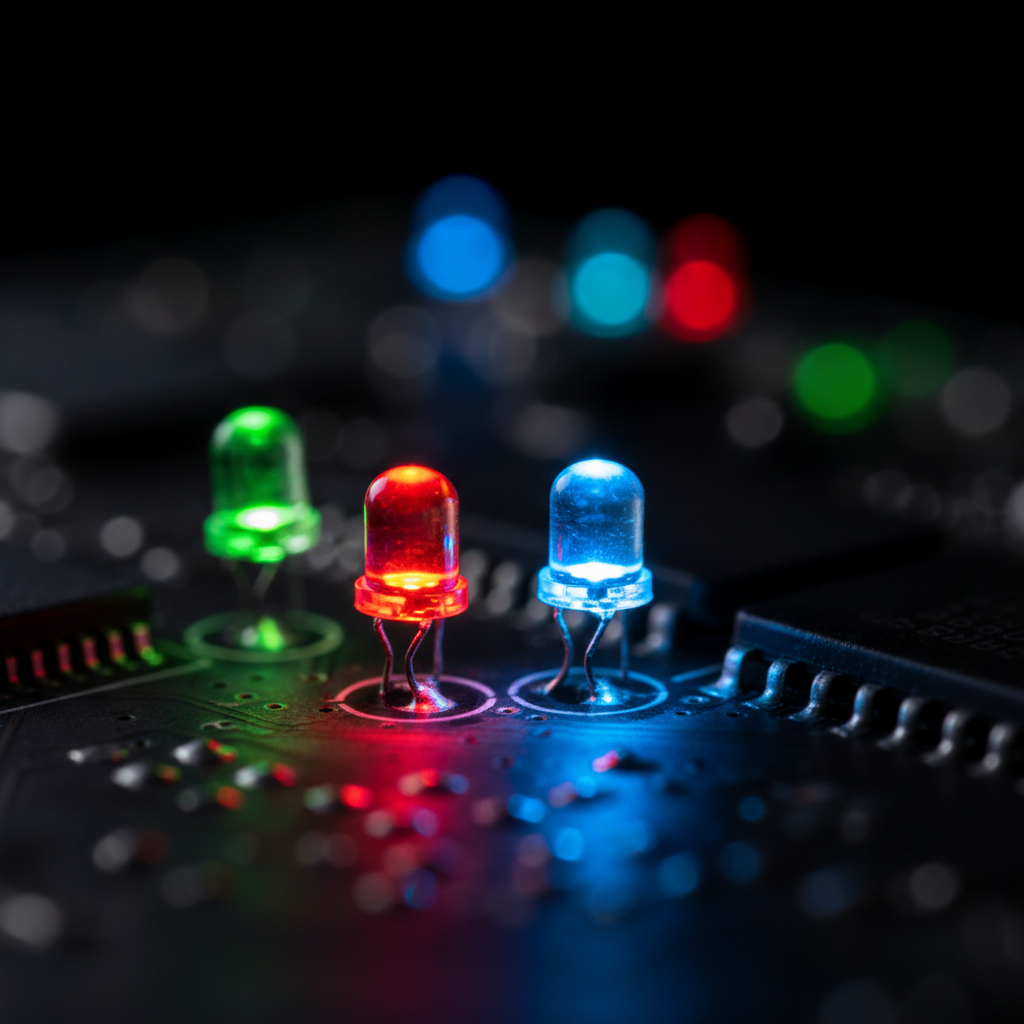
Transparent LED vs OLED — Which Transparent Display Technology is Best?
In the rapidly evolving landscape of display technology, transparent screens are emerging as a groundbreaking innovation, seamlessly blending digital content with physical environments. These futuristic displays offer a captivating visual experience, allowing viewers to see through the screen while simultaneously engaging with dynamic imagery, text, or video. As businesses and institutions in Singapore and beyond seek to create more immersive and interactive experiences, the demand for transparent display solutions is skyrocketing.
However, navigating the options can be complex. Two primary technologies dominate this niche: Transparent LED and Transparent OLED. While both deliver stunning see-through visuals, their underlying mechanisms, performance characteristics, and ideal applications differ significantly. Understanding these distinctions is crucial for making an informed investment decision that aligns with your specific project requirements and budget.
This comprehensive guide will delve deep into the world of transparent display technology, offering a detailed transparent display comparison between Transparent LED and Transparent OLED. We'll explore their fundamental principles, examine their respective strengths and weaknesses, discuss key performance metrics, and provide practical insights into their best use cases, particularly within the dynamic Singaporean market. By the end of this article, you'll have a clear understanding of which transparent screen technology is best suited for your needs, and why ADE Immersive is your trusted partner for cutting-edge display solutions in Singapore.
Understanding Transparent Display Technology: The Core Concept
Before we dive into the specifics of Transparent LED and OLED, let's establish a foundational understanding of what makes a display "transparent." Unlike traditional opaque screens that block light, transparent displays are designed to allow light to pass through them, creating a visual effect where digital content appears to float in mid-air, superimposed onto the real-world background.
This effect is achieved by engineering display panels with a high degree of transparency in their non-emitting areas. The active display elements (pixels) are strategically spaced or designed to be highly efficient, allowing a significant portion of ambient light to pass through the screen. The result is a captivating blend of physical and digital realities, offering unique opportunities for advertising, retail, museums, corporate lobbies, and architectural integration.
The magic lies in the pixel structure. For a display to be transparent, the individual light-emitting elements must be either very small and widely spaced, or inherently transparent when not actively emitting light. This fundamental difference in how light is manipulated and emitted forms the basis of distinction between Transparent LED and Transparent OLED technologies.
Transparent LED Displays: Robustness Meets Scalability
Transparent LED technology, often referred to as transparent LED screens or transparent LED video walls, leverages individual Light Emitting Diodes (LEDs) mounted on a highly transparent substrate, typically a robust acrylic or polycarbonate panel. These LEDs are strategically spaced, allowing for significant gaps between them through which light can pass.
How Transparent LED Works
At its core, a Transparent LED display consists of a series of miniature LEDs arranged in a grid pattern on a transparent circuit board. The key to its transparency lies in the spacing of these LEDs and the transparency of the substrate material. When the LEDs are off, the screen is largely see-through. When they are lit, they project vibrant images. The transparency level is directly related to the pixel pitch – the distance between the center of one LED cluster and the next. A larger pixel pitch generally means higher transparency, but lower resolution. Conversely, a smaller pixel pitch offers higher resolution but slightly reduced transparency.
Modern Transparent LED panels often feature innovative designs where the LED modules themselves are engineered to be as compact as possible, maximizing the open area. They are typically modular, allowing for the creation of large-scale video walls of virtually any size and shape, making them highly versatile for architectural integration and large-format digital signage.
Key Advantages of Transparent LED
-
High Brightness: Transparent LED displays are renowned for their exceptional brightness, often reaching upwards of 5,000 to 7,000 nits, and sometimes even higher for outdoor applications. This makes them perfectly suited for environments with high ambient light, such as storefront windows, outdoor advertising, or brightly lit exhibition halls. Their ability to cut through glare ensures content remains visible and impactful even in direct sunlight.
-
Durability and Robustness: Built with sturdy materials and designed for demanding environments, Transparent LED panels are generally more robust and resistant to physical impact, vibrations, and temperature fluctuations compared to their OLED counterparts. This makes them ideal for public spaces, retail environments with high foot traffic, and outdoor installations where resilience is paramount.
-
Scalability and Customization: One of the most significant strengths of Transparent LED is its modular design. Panels can be seamlessly connected to create display surfaces of virtually any size and configuration, from small interactive windows to massive building facades. This flexibility allows for highly customized installations, including curved or irregularly shaped displays, offering unparalleled creative freedom for architects and designers.
-
Energy Efficiency (Relative to Brightness): While LEDs consume power, their high luminous efficiency means they can achieve very high brightness levels for a relatively efficient power draw, especially when compared to traditional display technologies. For transparent applications, the ability to control individual LEDs also contributes to efficiency, as only the necessary pixels are illuminated.
-
Long Lifespan: LED technology is known for its longevity, with typical operational lifespans often exceeding 100,000 hours to half-brightness. This translates to lower maintenance costs and a higher return on investment over time, a crucial factor for businesses in Singapore looking for sustainable display solutions.
Ideal Applications for Transparent LED in Singapore
- Retail Storefronts: Imagine luxury boutiques along Orchard Road or Marina Bay Sands using Transparent LED to display product information, promotions, or fashion shows directly on their windows, allowing shoppers to see products inside while engaging with dynamic digital content. The high brightness ensures visibility even during the day.
- Architectural Integration: For iconic buildings or modern office towers in the CBD, Transparent LED can transform glass facades into dynamic media canvases, displaying corporate branding, artistic installations, or public information without obstructing views from inside.
- Shopping Malls and Atriums: Large-scale Transparent LED video walls can create breathtaking visual experiences in shopping mall atriums, displaying advertisements, event schedules, or interactive wayfinding, enhancing the overall shopper experience.
- Museums and Exhibitions: Transparent LED can be used to overlay historical data or interactive elements onto artifacts, creating an augmented reality-like experience for visitors at institutions like the ArtScience Museum or National Gallery Singapore.
- Event and Stage Design: For concerts, corporate events, or product launches, Transparent LED backdrops can create stunning visual effects, allowing performers or products to be seen through dynamic digital scenery.
Transparent OLED Displays: Unparalleled Contrast and Clarity
Transparent OLED (Organic Light Emitting Diode) technology represents a different approach to achieving transparency. Unlike LEDs, which are discrete light sources, OLEDs are emissive displays where each pixel is an organic compound that emits light when an electric current passes through it. In a transparent OLED, the organic layers and electrodes are engineered to be highly transparent when not actively emitting light.
How Transparent OLED Works
Transparent OLED panels are essentially standard OLED panels with a significant modification: the absence of a reflective cathode layer and the use of transparent components throughout the stack. When a pixel is "off," it becomes almost completely transparent, allowing light to pass through. When a pixel is "on," it emits its own light, creating vibrant colors. Because each pixel generates its own light, OLEDs can achieve "true black" by simply turning off individual pixels, leading to infinite contrast ratios.
The transparency level in OLEDs is typically achieved by making the non-emissive components as clear as possible. The active matrix driving the pixels is also designed to be transparent. This results in a display that can offer very high transparency when content is not being displayed, and incredible visual fidelity when it is.
Key Advantages of Transparent OLED
-
Exceptional Contrast Ratio and True Blacks: This is arguably the most significant advantage of Transparent OLED. Because each pixel can be individually turned off, it emits no light, resulting in perfect black levels. This leads to an "infinite" contrast ratio, making colors pop with incredible vibrancy and depth against the transparent background. Images appear strikingly realistic and vivid.
-
Superior Color Accuracy and Wide Viewing Angles: OLED technology is renowned for its ability to reproduce a vast color gamut with exceptional accuracy. Colors are rich, saturated, and true-to-life. Furthermore, OLED displays offer extremely wide viewing angles without any noticeable color shift or degradation, ensuring that content looks consistent from almost any perspective.
-
High Transparency (When Off): Transparent OLED panels can achieve very high levels of transparency, often exceeding 40% (and sometimes up to 45-50% for specific models), when pixels are not active. This creates a very clear, unobstructed view through the screen, making the digital content appear even more integrated into the physical environment.
-
Thin and Lightweight Design: Due to the nature of OLED technology, these panels can be incredibly thin and lightweight, offering sleek aesthetics and making them easier to integrate into various architectural and design contexts where space or weight is a concern.
-
Fast Response Time: OLED pixels respond almost instantaneously to changes in electrical current, resulting in extremely fast response times. This virtually eliminates motion blur, making Transparent OLED ideal for displaying fast-moving video content or interactive applications.
Ideal Applications for Transparent OLED in Singapore
- High-End Retail Displays: For luxury brands in Singapore, Transparent OLED offers an unparalleled premium aesthetic. Imagine displaying intricate details of a watch or jewelry on a transparent screen, allowing customers to see the actual product behind it, creating a sophisticated and engaging experience.
- Museum and Gallery Exhibits: At institutions like the National Museum of Singapore, Transparent OLED can create stunning interactive exhibits, overlaying information, animations, or historical footage directly onto artifacts or dioramas with exquisite clarity and color.
- Corporate Lobbies and Boardrooms: For prestigious corporate offices, Transparent OLED can serve as elegant informational displays, showcasing company achievements, interactive presentations, or digital art, blending seamlessly with modern interior design.
- Smart Home and Automotive Concepts: While still emerging, Transparent OLED has immense potential in high-tech applications, such as transparent car windows displaying navigation or infotainment, or smart home interfaces integrated into glass partitions.
- Showcases and Product Launches: For product launches or special events requiring a "wow" factor, Transparent OLED can highlight products with stunning visual overlays, creating a memorable and impactful presentation.
Transparent LED vs OLED: A Detailed Comparison
To help you make an informed decision, let's break down the key differences between Transparent LED and Transparent OLED across several critical performance metrics.
Comparison Table: Transparent LED vs OLED
| Feature | Transparent LED | Transparent OLED |
|---|---|---|
| Technology | Individual LEDs on transparent substrate | Organic light-emitting diodes (self-emissive) |
| Transparency Level | 60-90% (depends on pixel pitch) | 30-50% (typical for commercially available) |
| Brightness (Nits) | Very High (5,000 - 7,000+ nits) | Moderate (1,000 - 2,000 nits) |
| Contrast Ratio | Good (limited by black levels) | Infinite (true blacks) |
| Color Accuracy | Good, can be calibrated | Excellent, wide color gamut |
| Viewing Angle | Good (slight color shift at extreme angles) | Excellent (virtually no color shift) |
| Pixel Pitch/Resolution | Variable (P2.9mm to P20mm+), lower resolution for higher transparency | Fixed (typically high resolution, e.g., 1080p, 4K) |
| Durability | High (robust, impact resistant) | Moderate (more fragile, susceptible to burn-in) |
| Lifespan | Very Long (100,000+ hours to half brightness) | Long (50,000 - 100,000 hours to half brightness) |
| Power Consumption | Higher for very high brightness | Lower for typical brightness, efficient blacks |
| Size & Form Factor | Highly scalable, modular, customizable shapes | Limited by panel size, typically flat |
| Cost | Generally lower per square meter (for large sizes) | Higher per square meter |
| Outdoor Suitability | Excellent (high brightness, durability) | Limited (brightness, durability, UV sensitivity) |
| Maintenance | Easier (individual module replacement) | More complex (panel replacement) |
In-Depth Analysis of Key Metrics
1. Transparency Level
- Transparent LED: Offers a wider range of transparency, typically from 60% to over 90%. This is highly dependent on the pixel pitch. A larger pixel pitch means more open space and thus higher transparency. This flexibility allows designers to prioritize transparency when needed, even if it means slightly lower resolution.
- Transparent OLED: Generally provides a transparency level between 30% and 50%. While this might seem lower than some LED options, the key difference is how the transparency is perceived. When OLED pixels are off, they are truly transparent, offering a very clear view. The transparency is consistent across the panel regardless of the content displayed.
2. Brightness
- Transparent LED: This is where Transparent LED truly shines. With brightness levels often exceeding 5,000 nits and sometimes reaching 7,000-8,000 nits, these displays are perfectly suited for environments with intense ambient light, including direct sunlight. This makes them ideal for storefront windows or outdoor architectural media facades in Singapore's bright tropical climate.
- Transparent OLED: While offering excellent contrast, Transparent OLEDs typically have a peak brightness ranging from 1,000 to 2,000 nits. This is sufficient for indoor environments with controlled lighting, such as museums, corporate lobbies, or high-end retail interiors. However, they struggle to compete with direct sunlight or very brightly lit spaces, where content can appear washed out.
3. Contrast Ratio and Black Levels
- Transparent LED: Provides good contrast, but its black levels are not "true black." Even when LEDs are off, some ambient light can reflect off the LED components and circuitry, preventing a perfect black. This can make dark areas of content appear slightly greyish against a bright background.
- Transparent OLED: This is its undisputed champion feature. Each pixel generates its own light and can be completely turned off, resulting in "true black." This delivers an infinite contrast ratio, making images incredibly vivid, with deep blacks and vibrant colors that truly pop, creating a stunning visual experience where content appears to float with unparalleled depth.
4. Color Accuracy and Viewing Angles
- Transparent LED: Offers good color reproduction, and modern LED displays can be calibrated to achieve impressive color accuracy. Viewing angles are generally good, but some color shift or brightness drop-off might be noticeable at extreme angles, especially with larger pixel pitches.
- Transparent OLED: Excels in color accuracy, reproducing a wide color gamut with exceptional precision. Colors are rich, saturated, and consistent. Furthermore, OLEDs boast near-perfect viewing angles, meaning the image quality remains consistent and vibrant regardless of the viewer's position, which is crucial for public displays.
5. Resolution and Pixel Pitch
- Transparent LED: Resolution is directly tied to pixel pitch. To achieve high transparency, the pixel pitch often needs to be larger, leading to lower resolution for a given screen size. However, advancements are continually reducing pixel pitches, offering higher resolutions while maintaining good transparency. For very large-scale installations, the viewing distance often compensates for the lower pixel density.
- Transparent OLED: Typically offers very high resolution (e.g., Full HD or 4K) within standard panel sizes. This is due to the inherent nature of OLED technology, where individual pixels are very small and tightly packed. This makes them ideal for displaying intricate details, fine text, or high-definition video content.
6. Durability and Lifespan
- Transparent LED: Generally more robust and durable. The individual LEDs are often protected by a resin coating, and the overall modular structure is built to withstand more environmental stress. They have a very long lifespan, typically over 100,000 hours to half-brightness.
- Transparent OLED: While improving, OLED panels are inherently more delicate due to their organic nature and ultra-thin glass substrate. They are more susceptible to physical impact and can be prone to "burn-in" or image retention if static images are displayed for prolonged periods at high brightness. Their lifespan is typically 50,000 to 100,000 hours.
7. Cost
- Transparent LED: For large-scale installations, Transparent LED often presents a more cost-effective solution per square meter, especially when considering its scalability and robustness. Initial investment can be significant, but lower maintenance and longer lifespan contribute to a better long-term ROI.
- Transparent OLED: Currently, Transparent OLED technology is more expensive per square meter, particularly for larger panel sizes. The advanced manufacturing processes and the specialized transparent components contribute to a higher premium. However, as the technology matures, costs are expected to decrease.
Choosing the Right Transparent Screen Technology: Practical Advice
The decision between Transparent LED and Transparent OLED ultimately hinges on your specific application, environmental conditions, budget, and desired visual impact. Here's a practical guide to help you weigh your options:
When to Choose Transparent LED
- Outdoor or Bright Indoor Environments: If your display will be exposed to direct sunlight or very high ambient light (e.g., storefront windows, building facades, large atriums), Transparent LED's superior brightness is non-negotiable.
- Large-Scale Installations: For massive video walls, architectural media facades, or custom-shaped displays that require seamless scalability, Transparent LED is the clear winner due to its modular design.
- High Durability Requirements: In public spaces with high foot traffic or where physical impact is a concern, the robustness of Transparent LED offers peace of mind.
- Cost-Effectiveness for Large Areas: For extensive transparent display areas, Transparent LED generally offers a more budget-friendly solution per square meter.
- Prioritizing Transparency over Ultra-Fine Detail: If your primary goal is maximum transparency and the content is large-format visuals or text viewed from a distance, Transparent LED with a larger pixel pitch can be highly effective.
Example in Singapore: A flagship retail store on Orchard Road wants to transform its entire glass facade into a dynamic advertising canvas, visible from across the street even on a sunny day. They need to display vibrant, large-scale promotional videos. Transparent LED would be the ideal choice due to its high brightness, scalability, and outdoor suitability.
When to Choose Transparent OLED
- Premium Indoor Environments with Controlled Lighting: For luxury retail interiors, high-end corporate lobbies, museums, or art galleries where ambient light can be controlled, Transparent OLED delivers an unmatched visual experience.
- Requiring Unrivaled Contrast and Color Accuracy: If your content demands the absolute best in black levels, vibrant colors, and intricate detail (e.g., displaying high-resolution product imagery, detailed infographics, fine art), Transparent OLED's infinite contrast and superior color reproduction are paramount.
- Interactive Displays with Close Viewing Distances: For interactive showcases or exhibits where viewers will be very close to the screen, Transparent OLED's high resolution and perfect viewing angles ensure an immersive and high-quality experience.
- Sleek, Thin, and Lightweight Aesthetics: If design aesthetics prioritize an ultra-thin profile and seamless integration into sophisticated interiors, Transparent OLED is the preferred option.
- Content with Darker Tones or High Dynamic Range (HDR): For content that benefits from deep blacks and a wide range of luminosity, Transparent OLED will render it with stunning fidelity.
Example in Singapore: The ArtScience Museum is developing a new exhibit featuring delicate artifacts. They want to overlay interactive information, 3D models, and historical context directly onto the display cases, allowing visitors to see the artifact clearly while engaging with rich digital content. Transparent OLED would be perfect for its exquisite clarity, contrast, and color accuracy, enhancing the educational and aesthetic experience.
Hybrid Approaches and Emerging Trends
It's also worth noting that in some complex installations, a hybrid approach might be considered, combining the strengths of both technologies in different areas of a project. For instance, a building facade might use Transparent LED for large-scale outdoor visuals, while interior showcases might feature Transparent OLED for close-up, high-detail content.
The transparent screen technology landscape is continuously evolving. We are seeing advancements in both LED and OLED:
- MicroLED: This emerging technology promises to combine the best of both worlds – the self-emissive nature and true blacks of OLED with the brightness, durability, and longevity of traditional inorganic LEDs. Transparent MicroLEDs are on the horizon and could revolutionize the market.
- Improved Transparency and Durability: Manufacturers are constantly working to increase the transparency levels of OLEDs and enhance the robustness of both technologies, while also driving down costs.
Installation and Maintenance Considerations
Beyond the technical specifications, practical aspects like installation and maintenance are crucial for any transparent display project in Singapore.
Installation Complexity
- Transparent LED: Due to its modular nature, Transparent LED installation can be more involved for very large, custom-shaped installations. It requires precise alignment of individual panels and often involves custom mounting structures. However, for standard rectangular video walls, the process is well-established.
- Transparent OLED: Generally simpler to install for standard panel sizes due to their lightweight and thin form factor. They typically come as pre-assembled panels. However, careful handling is required due to their fragility.
Power Requirements
Both technologies require specific power infrastructure. Transparent LED, especially for high-brightness outdoor applications, will have higher peak power consumption. Transparent OLED, while generally more power-efficient for its brightness, still requires dedicated power. ADE Immersive can conduct thorough site surveys to assess power availability and recommend necessary upgrades.
Environmental Factors
- Temperature and Humidity: Singapore's tropical climate (high heat and humidity) is a significant factor. Transparent LED is generally more resilient to temperature fluctuations and moisture. Transparent OLED requires more controlled environmental conditions, typically suitable for indoor, air-conditioned spaces.
- UV Exposure: For outdoor or window-facing installations, UV radiation can degrade organic materials over time. Transparent LED is largely unaffected, while Transparent OLED requires careful consideration of UV filtering or protection if exposed to direct sunlight for prolonged periods.
Maintenance and Servicing
- Transparent LED: Maintenance is often easier. If an individual LED module fails, it can often be replaced without affecting the entire display, minimizing downtime and repair costs. ADE Immersive provides comprehensive maintenance services, including swift module replacement.
- Transparent OLED: If an OLED panel develops a fault, the entire panel typically needs to be replaced, which can be more costly and time-consuming. However, their generally higher reliability can offset this in controlled environments.
Why ADE Immersive is Your Trusted Partner in Singapore
Navigating the complexities of transparent led vs oled and selecting the optimal transparent screen technology requires expert guidance. This is where ADE Immersive stands out as Singapore's premier LED video wall supplier.
With years of experience in delivering cutting-edge display solutions, ADE Immersive offers:
- Unbiased Expertise: We understand both Transparent LED and Transparent OLED technologies deeply. Our team provides objective advice, helping you choose the solution that genuinely fits your project's goals, environment, and budget, rather than pushing a single technology.
- Comprehensive Project Management: From initial consultation and site assessment to design, installation, content integration, and ongoing maintenance, ADE Immersive provides end-to-end support, ensuring a seamless and successful deployment.
- Customization and Innovation: We specialize in bespoke solutions. Whether you need a massive Transparent LED facade for a commercial building or a delicate Transparent OLED showcase for a luxury brand, we have the capabilities to bring your vision to life.
- Local Market Knowledge: Our deep understanding of Singapore's unique environmental conditions, regulatory requirements, and market trends allows us to recommend and implement solutions that are robust, compliant, and impactful for the local context.
- Premium Quality and Reliability: We partner with leading manufacturers to supply only the highest quality transparent display products, ensuring exceptional performance, longevity, and a strong return on your investment.
- Dedicated After-Sales Support: Our commitment extends beyond installation. ADE Immersive offers comprehensive maintenance packages and rapid response services to keep your transparent displays operating flawlessly, maximizing their uptime and effectiveness.
We believe that the future of visual communication is transparent, immersive, and interactive. By partnering with ADE Immersive, you gain access to not just advanced technology, but also a team of dedicated professionals committed to transforming your space with breathtaking visual experiences.
Conclusion
The choice between Transparent LED and Transparent OLED is not about which technology is inherently "better," but rather which is "best suited" for your specific application. Both offer incredible potential to create stunning, engaging, and futuristic visual experiences.
Transparent LED excels in high-brightness environments, large-scale architectural integrations, and applications demanding extreme durability and scalability. It's the workhorse for impactful outdoor and brightly lit indoor transparent displays.
Transparent OLED, on the other hand, is the undisputed champion for premium indoor settings where unparalleled contrast, color accuracy, and fine detail are paramount. It delivers a sophisticated, almost magical visual effect, perfect for luxury retail, museums, and high-end corporate environments.
As you consider integrating transparent displays into your next project in Singapore, remember the critical distinctions in brightness, contrast, durability, scalability, and cost. Evaluate your environment, content requirements, and budget carefully.
Ready to explore the possibilities of transparent display technology for your business or project in Singapore?
Contact ADE Immersive today for a personalized consultation. Our experts will guide you through the options, provide detailed recommendations, and help you design and implement a transparent display solution that truly captivates your audience and elevates your brand.
Need Expert Advice?
Get a free consultation from our LED display specialists.
Related Articles
What to Expect During LED Video Wall Installation — Step by Step
Embarking on an LED video wall project is an exciting venture, promising to transform spaces with dynamic visuals and unparalleled impact. However, the journey from concept to a fully operational display involves a meticulous process, particularly wh...
How LED Displays Transform Retail Stores in Singapore
The retail landscape in Singapore is undergoing a profound transformation, driven by evolving consumer expectations and the relentless pace of technological innovation. In this competitive environment, traditional static signage is increasingly being...
LED Video Wall vs Projector — Which is Better for Your Space?
In the dynamic world of visual display technology, choosing the right solution for your space can be a complex decision. Two of the most prominent contenders, LED video walls and projectors, offer distinct advantages and disadvantages. Whether you're...