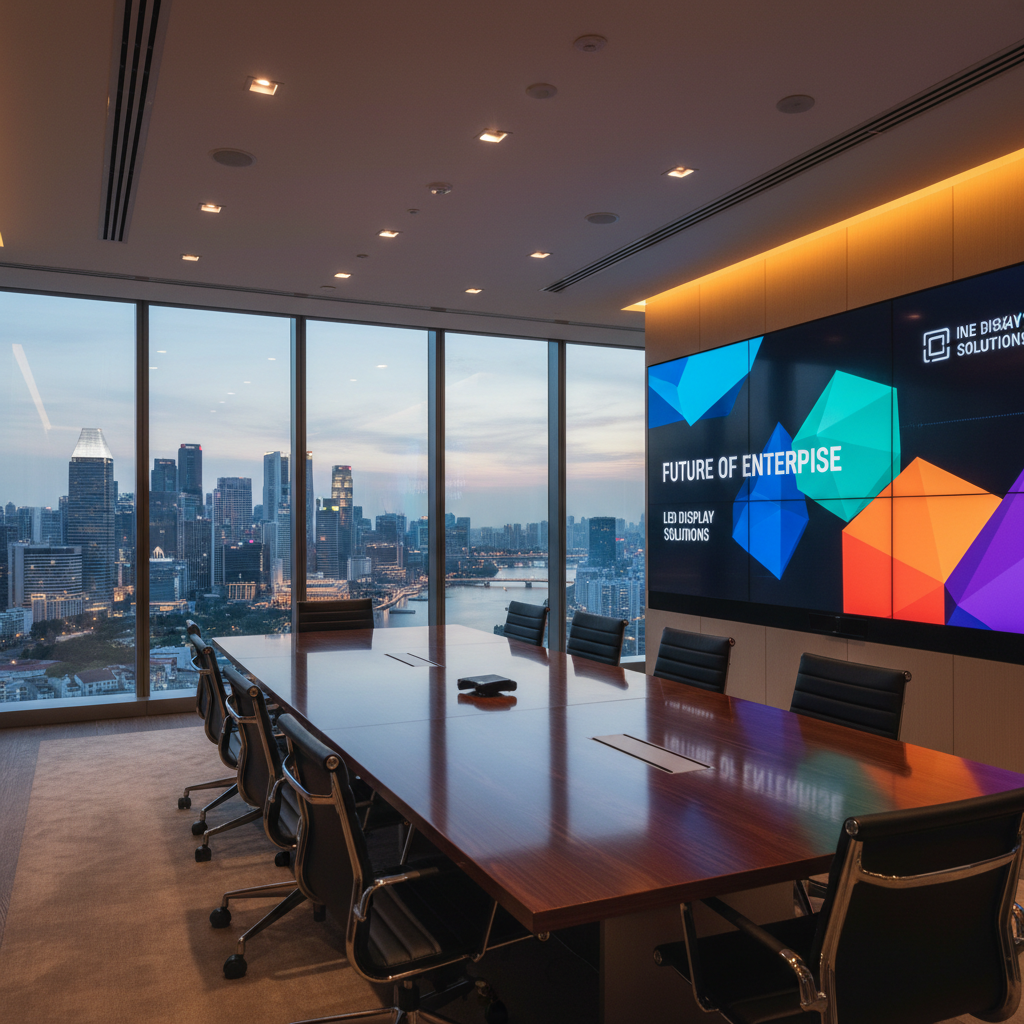
LED Video Wall Pixel Pitch Guide — How to Choose the Right Pixel Pitch
In the dynamic world of visual communication, LED video walls have become indispensable tools for businesses and organizations across Singapore, from the bustling retail hubs of Orchard Road to the innovative exhibition spaces at Marina Bay Sands. These vibrant displays capture attention, convey messages with unparalleled clarity, and create immersive experiences. However, navigating the technical specifications of LED video walls can be daunting, especially when it comes to a crucial factor: pixel pitch. This comprehensive guide from ADE Immersive, Singapore's trusted LED display partner, will demystify LED video wall pixel pitch, helping you understand its significance and how to choose the perfect one for your specific needs, ensuring optimal visual impact and return on investment.
Understanding LED Video Wall Pixel Pitch
At its core, LED video wall pixel pitch refers to the distance, measured in millimeters (mm), between the centers of two adjacent LED clusters (or pixels) on an LED display. It's a fundamental specification that directly impacts the visual quality, viewing distance, and overall cost of an LED video wall. A smaller pixel pitch means the LEDs are closer together, resulting in a higher pixel density and, consequently, a sharper, more detailed image. Conversely, a larger pixel pitch means the LEDs are further apart, leading to a lower pixel density and a more pixelated image when viewed up close.
Think of it like this: imagine a mosaic. If the tiles are very small and close together, you can create a highly detailed picture. If the tiles are large and spaced out, the picture will appear more abstract or blocky, especially if you stand close to it. The same principle applies to LED video walls. The "tiles" are the individual pixels, and their spacing (pixel pitch) determines the level of detail and clarity.
The Relationship Between Pixel Pitch and Resolution
While often discussed together, pixel pitch and LED display resolution are distinct but intrinsically linked concepts.
- Pixel Pitch (mm): This is a physical characteristic of the LED panel itself, defining the density of pixels per unit area. For example, a P2.5 LED panel has a pixel pitch of 2.5mm.
- LED Display Resolution (pixels): This refers to the total number of pixels horizontally and vertically on the entire video wall, or a specific section of it. It's calculated by dividing the physical dimensions of the display by the pixel pitch. For instance, an LED panel measuring 500mm x 500mm with a 2.5mm pixel pitch would have a resolution of (500/2.5) x (500/2.5) = 200 x 200 pixels. A larger video wall built from multiple such panels would have a much higher overall resolution.
A smaller pixel pitch allows for a higher native resolution within a given physical display size. This is crucial for applications where fine detail, crisp text, or intricate graphics are paramount. For example, a 4-meter wide LED wall with a P1.5 pixel pitch will have a much higher resolution than a 4-meter wide LED wall with a P5 pixel pitch, offering superior image quality from closer viewing distances.
Why Pixel Pitch Matters So Much
The choice of led video wall pixel pitch is not merely a technical detail; it's a strategic decision that affects:
- Image Quality and Clarity: Smaller pixel pitches deliver smoother images, sharper text, and more vibrant colors, especially when viewed up close.
- Optimal Viewing Distance: This is perhaps the most critical factor. The human eye can only resolve a certain level of detail at a given distance. If the pixel pitch is too large for the viewing distance, the individual pixels will be visible, leading to a "screen door effect" and a degraded viewing experience.
- Cost: Generally, the smaller the pixel pitch, the higher the manufacturing cost due to the increased complexity of packing more LEDs into a smaller space and the higher precision required.
- Power Consumption and Heat Generation: Denser pixel configurations often mean more LEDs packed into the same area, potentially leading to higher power consumption and heat generation, which must be managed effectively.
- Application Suitability: Different applications demand different levels of detail and have varying viewing distances, making the pixel pitch choice highly application-specific.
Understanding these implications is the first step towards making an informed decision for your LED video wall project in Singapore.
The Critical Role of Viewing Distance in Pixel Pitch Selection
The most significant factor influencing your choice of led video wall pixel pitch is the optimal viewing distance. This is the distance at which the human eye can no longer discern individual pixels, perceiving a smooth, continuous image. If viewers are too close to a large pixel pitch display, the image will appear pixelated. If they are too far from a small pixel pitch display, the extra detail provided by the smaller pitch might be wasted, and you would have overspent.
Calculating Optimal Viewing Distance
Several formulas and guidelines exist to help determine the optimal viewing distance. While these are approximations, they provide an excellent starting point.
1. The "10x Rule" (General Guideline)
A simple rule of thumb suggests that the minimum comfortable viewing distance is approximately 10 times the pixel pitch in millimeters.
- Minimum Viewing Distance (meters) = Pixel Pitch (mm) x 0.01
For example:
- A P2.5 LED wall: 2.5mm x 0.01 = 0.025 meters (2.5 cm). This formula is more useful for determining the minimum distance before pixelation becomes distracting.
2. The SMPTE (Society of Motion Picture and Television Engineers) Guideline
The SMPTE standard recommends a viewing distance where the individual pixels are no longer discernible. This is often cited as:
- Minimum Viewing Distance (meters) = Pixel Pitch (mm) x 0.8 (or sometimes 0.75 to 1.0)
Using this for a P2.5 LED wall: 2.5mm x 0.8 = 2 meters. This suggests that for a P2.5 display, viewers should ideally be at least 2 meters away to see a smooth image.
3. The "2x Rule" (Maximum Viewing Distance)
This rule suggests that the maximum effective viewing distance is roughly twice the distance at which the pixels are no longer visible. Beyond this, the image might appear too small or lose its impact.
- Maximum Viewing Distance (meters) = Pixel Pitch (mm) x 2.0
Using this for a P2.5 LED wall: 2.5mm x 2.0 = 5 meters. This implies that while you can view a P2.5 display from 2 meters, its effectiveness might diminish beyond 5 meters, depending on content and size.
4. Practical Viewing Distance Range
Combining these, a practical viewing distance range can be established:
- Optimal Viewing Distance Range: (Pixel Pitch in mm x 0.8) to (Pixel Pitch in mm x 2.0)
Let's look at some common pixel pitches and their recommended viewing distances:
| Pixel Pitch (mm) | Minimum Viewing Distance (m) (SMPTE) | Optimal Viewing Distance Range (m) | Typical Application |
|---|---|---|---|
| P0.9 | 0.72 | 0.72 - 1.8 | Control Rooms, Broadcast Studios, High-End Retail |
| P1.2 | 0.96 | 0.96 - 2.4 | Corporate Lobbies, Luxury Retail, Small Auditoriums |
| P1.5 | 1.2 | 1.2 - 3.0 | Boardrooms, Exhibitions, Museums |
| P1.8 | 1.44 | 1.44 - 3.6 | Conference Rooms, Medium-Sized Retail, Restaurants |
| P2.5 | 2.0 | 2.0 - 5.0 | Shopping Malls, Large Retail, Event Backdrops |
| P3.9 | 3.12 | 3.12 - 7.8 | Large Event Screens, Concerts, Outdoor Signage (closer) |
| P4.8 | 3.84 | 3.84 - 9.6 | Large Outdoor Events, Stadiums, Building Facades |
| P6.0 | 4.8 | 4.8 - 12.0 | Large Outdoor Advertising, Public Squares |
| P10 | 8.0 | 8.0 - 20.0 | Large-Scale Outdoor Billboards, Distant Signage |
Note: These are guidelines. Content complexity, ambient light, and audience expectations can also influence the ideal pixel pitch.
Real-World Examples in Singapore
Consider these scenarios in Singapore:
- Luxury Retail Store on Orchard Road: For a high-end fashion boutique where customers will be viewing products and promotional content up close (e.g., 1-3 meters away), a fine pixel pitch like P1.2 or P1.5 would be essential to showcase intricate details of clothing or jewelry. A P3.9 would appear pixelated and detract from the premium brand image.
- Corporate Lobby in the CBD: In a corporate reception area where visitors might be 2-5 meters away, a P1.8 or P2.5 display would offer excellent clarity for corporate branding, news feeds, or welcome messages.
- Large Exhibition Booth at Suntec City: For an exhibition where attendees might be viewing the main display from 3-8 meters, a P2.5 or P3.9 could be suitable, balancing visual impact with cost-effectiveness. If the booth also has smaller, interactive screens for closer viewing, those might require a P1.5 or P1.8.
- Outdoor Digital Billboard along the AYE: For a billboard viewed by motorists from 20-50 meters away, a larger pixel pitch like P6.0 or even P10 would be perfectly adequate and significantly more cost-effective. A P1.5 would be an unnecessary expense, as the human eye wouldn't discern the extra detail from that distance.
ADE Immersive always conducts a thorough site assessment and discusses your specific viewing environment to recommend the most appropriate led video wall pixel pitch for your project.
Factors Beyond Viewing Distance: A Holistic Approach
While viewing distance is paramount, several other critical factors must be considered when selecting the ideal led video wall pixel pitch for your project in Singapore. A holistic approach ensures that your investment yields the best possible results.
1. Content Type and Complexity
The nature of the content you intend to display plays a significant role in determining the required pixel pitch.
- High-Detail Content: If your content includes intricate graphics, small text, detailed product shots, or high-resolution video (e.g., 4K or 8K), a finer pixel pitch (e.g., P0.9 to P2.5) is crucial to render these details faithfully. This is common in broadcast studios, control rooms, or luxury brand advertising.
- General Information/Branding: For displaying large text, bold graphics, or general branding messages (e.g., company logo, simple animations), a slightly larger pixel pitch (e.g., P2.5 to P3.9) might suffice, especially if the viewing distance is moderate.
- Live Video Feeds: For live events or conferences, where the focus is on people and general action, a moderate pixel pitch can often provide a good balance between clarity and cost.
- Static Images/Simple Animations (Outdoor): For outdoor advertising billboards displaying static images or simple, large animations, a larger pixel pitch (e.g., P4.8 to P10) is often adequate given the distant viewing.
Choosing a pixel pitch that is too large for detailed content will result in a blurry or pixelated image, undermining your message. Conversely, an overly fine pixel pitch for simple content viewed from afar is an unnecessary expense.
2. Budget Constraints
Cost is almost always a significant consideration. As a general rule:
- Smaller Pixel Pitch = Higher Cost: This is due to the increased number of LEDs, more complex manufacturing processes, higher precision components, and often more sophisticated processing required.
- Larger Pixel Pitch = Lower Cost: Fewer LEDs and simpler manufacturing lead to a more budget-friendly solution.
It's essential to find the sweet spot where the pixel pitch meets your visual quality requirements without exceeding your budget. ADE Immersive works closely with clients to provide cost-effective solutions that do not compromise on quality. We can help you explore options where a slightly larger pixel pitch, combined with intelligent content design and strategic placement, can still deliver impressive results.
3. Ambient Lighting Conditions
The environment's brightness significantly impacts how your LED video wall will perform and, indirectly, influences pixel pitch selection.
- Bright Environments (e.g., outdoors in direct sunlight, brightly lit retail spaces): Displays in these conditions require higher brightness (nits) to remain visible and impactful. While brightness isn't directly a pixel pitch factor, smaller pixel pitch displays often have higher contrast ratios, which can improve visibility in bright conditions. For outdoor applications, robust, weather-resistant modules are also critical, often found in larger pixel pitch outdoor screens.
- Dim Environments (e.g., control rooms, theaters, dark exhibition spaces): In darker settings, extremely high brightness can be uncomfortable. Displays need excellent low-brightness performance and high refresh rates to prevent flickering. Fine pixel pitch displays excel here, offering superior contrast and color depth.
For outdoor applications in Singapore's tropical climate, ADE Immersive ensures that our LED solutions offer sufficient brightness (typically 5,000-10,000 nits) and are built to withstand humidity and heat, regardless of pixel pitch.
4. Physical Size of the LED Video Wall
The overall physical dimensions of your LED video wall also interact with pixel pitch.
- Achieving Specific Resolution: If you need to achieve a specific LED display resolution (e.g., full HD 1920x1080, or 4K 3840x2160), the pixel pitch will dictate the physical size of the wall. For example, to achieve 4K resolution with a P1.25 display, you'd need a wall approximately 4.8 meters wide by 2.7 meters high. With a P2.5 display, that same 4K resolution would require a wall roughly 9.6 meters wide by 5.4 meters high.
- Space Constraints: If you have limited physical space but require high resolution, a smaller pixel pitch is necessary. Conversely, if you have ample space and a distant audience, a larger pixel pitch can achieve a massive display size more affordably.
It's crucial to balance the desired resolution, available space, and budget. Sometimes, a slightly lower resolution with a larger pixel pitch on a bigger physical wall can be more impactful than a tiny, ultra-high-resolution screen.
5. Installation and Maintenance Considerations
While not directly a pixel pitch factor, the choice of pixel pitch can influence the complexity of installation and future maintenance.
- Module Size: Smaller pixel pitch displays often come in smaller, more delicate modules, which can sometimes increase installation time and require more precise handling.
- Front vs. Rear Serviceability: Depending on the installation location (e.g., recessed into a wall), front-serviceable modules are often preferred. This design choice is available across various pixel pitches but is a crucial consideration for long-term maintenance.
- Durability: For outdoor or high-traffic areas, the robustness of the LED modules is important. Larger pixel pitch outdoor displays are often designed with greater ruggedness.
ADE Immersive provides comprehensive installation and maintenance services, ensuring your chosen LED video wall, regardless of its pixel pitch, performs optimally throughout its lifespan.
By carefully evaluating these factors alongside viewing distance, you can make an informed decision that perfectly aligns with your project's goals and budget.
Common Pixel Pitch Ranges and Their Applications
To further guide your selection, let's categorize common led video wall pixel pitch ranges and explore their typical applications, offering practical insights relevant to the Singapore market.
1. Fine Pixel Pitch (P0.9mm - P2.5mm)
This range represents the cutting edge of LED display technology, offering the highest pixel density and exceptional image clarity.
-
Characteristics:
- Ultra-High Resolution: Capable of displaying incredibly sharp images, fine text, and intricate graphics, even at very close viewing distances.
- Premium Visuals: Delivers superior color uniformity, contrast, and depth.
- Higher Cost: Due to the precision manufacturing and increased component density.
- Closer Viewing Distances: Ideal for audiences viewing from 1 to 5 meters away.
-
Typical Applications in Singapore:
- Corporate Boardrooms & Lobbies: For impressive presentations, corporate branding, and high-impact visual communication in prestigious settings. Think of the sleek lobbies in Marina Bay Financial Centre or the sophisticated meeting rooms in Raffles Place.
- Broadcast Studios & Control Rooms: Essential for displaying detailed data, multiple video feeds, and critical information where clarity and reliability are paramount (e.g., news studios, traffic control centers).
- Luxury Retail & Showrooms: To showcase high-end products with stunning detail, creating immersive brand experiences on Orchard Road or at The Shoppes at Marina Bay Sands.
- Museums & Art Galleries: For interactive exhibits and displaying digital art with lifelike fidelity.
- High-End Exhibition Booths: When you need to make a strong visual statement and attract attention at events like ITB Asia or CommunicAsia.
-
ADE Immersive Insight: For projects demanding the absolute best in visual performance and where budget allows, fine pixel pitch displays are unmatched. We've deployed these solutions in some of Singapore's most prestigious corporate and retail environments, consistently delivering breathtaking results.
2. Medium Pixel Pitch (P2.6mm - P4.8mm)
This range offers a versatile balance between visual quality, viewing distance, and cost-effectiveness, making it a popular choice for a wide array of applications.
-
Characteristics:
- Excellent Resolution: Provides very good image quality for most common content types.
- Flexible Viewing Distances: Suitable for audiences viewing from 2.5 to 10 meters away.
- Balanced Cost: More affordable than fine pixel pitch, offering a strong return on investment.
- Versatile: Can be used both indoors and outdoors, depending on specific model and brightness.
-
Typical Applications in Singapore:
- Shopping Malls & Retail Environments: For dynamic advertising, wayfinding, and promotional content in common areas of malls like VivoCity or NEX.
- Conference Rooms & Auditoriums: For presentations, video conferencing, and general event backdrops where the audience is seated at a moderate distance.
- Restaurants & Entertainment Venues: To display menus, sports events, or ambient visuals.
- Indoor Event Backdrops: For concerts, product launches, and corporate events where the main audience is slightly further away.
- Outdoor Signage (Closer View): For digital billboards or building facades where pedestrians or slow-moving traffic will view the content from relatively closer distances (e.g., along busy streets or at bus interchanges).
-
ADE Immersive Insight: Medium pixel pitch displays are our most frequently requested category due to their versatility and value. They offer a fantastic blend of performance and affordability, making them ideal for many commercial and event applications across Singapore.
3. Large Pixel Pitch (P5mm - P10mm+)
This range is primarily designed for applications where the viewing distance is significant, prioritizing large-scale visibility and robust outdoor performance.
-
Characteristics:
- Lower Resolution (per square meter): Individual pixels become visible at closer distances.
- Long Viewing Distances: Optimized for audiences viewing from 5 meters to 50+ meters away.
- Most Cost-Effective: Lowest cost per square meter, making large displays achievable within budget.
- High Brightness & Durability: Often built for outdoor use, with high brightness to combat sunlight and robust, weather-resistant designs.
-
Typical Applications in Singapore:
- Outdoor Digital Billboards: Along expressways (e.g., PIE, AYE), building facades, or public squares where messages need to be seen from afar by motorists and pedestrians.
- Stadiums & Sports Arenas: For scoreboards, replays, and advertising at venues like the Singapore Sports Hub.
- Large-Scale Outdoor Events & Concerts: Providing large screens for distant audiences at festivals or public gatherings.
- Public Information Displays: In large open spaces like parks or transportation hubs where information needs to be visible from a distance.
-
ADE Immersive Insight: For impactful, large-format outdoor advertising or public information displays, large pixel pitch solutions are the go-to. We ensure these displays are not only visible but also durable enough to withstand Singapore's challenging outdoor environment, providing reliable performance year after year.
By understanding these categories and their typical uses, you can begin to narrow down the ideal led video wall pixel pitch for your specific project. Remember, ADE Immersive's experts are always here to provide tailored advice based on your unique requirements.
The Impact of Pixel Pitch on LED Display Resolution and Content Creation
Beyond just visual clarity, the chosen led video wall pixel pitch profoundly influences the overall LED display resolution of your video wall and, consequently, how you should approach content creation. Understanding this relationship is key to maximizing your display's potential.
Calculating Total LED Display Resolution
Once you've selected a pixel pitch and determined the physical dimensions of your LED video wall, you can easily calculate its total resolution.
Formula:
- Horizontal Resolution (pixels) = (Panel Width in mm / Pixel Pitch in mm) x Number of Horizontal Panels
- Vertical Resolution (pixels) = (Panel Height in mm / Pixel Pitch in mm) x Number of Vertical Panels
Let's take an example: Imagine you want to build an LED video wall that is 4 meters (4000mm) wide and 2.25 meters (2250mm) high.
Scenario 1: Using P2.5 LED Panels
- Horizontal Resolution = 4000mm / 2.5mm = 1600 pixels
- Vertical Resolution = 2250mm / 2.5mm = 900 pixels
- Total Resolution: 1600 x 900 pixels (equivalent to HD 720p, but in a wider aspect ratio)
Scenario 2: Using P1.25 LED Panels
- Horizontal Resolution = 4000mm / 1.25mm = 3200 pixels
- Vertical Resolution = 2250mm / 1.25mm = 1800 pixels
- Total Resolution: 3200 x 1800 pixels (approaching 4K resolution)
As you can see, a smaller pixel pitch significantly increases the total LED display resolution for the same physical size. This higher resolution allows for more detailed content to be displayed without pixelation.
Implications for Content Creation
The total LED display resolution directly dictates the optimal resolution for your content.
-
Native Resolution is Best: Always strive to create or source content at the native resolution of your LED video wall.
- Upscaling: If your content has a lower resolution than the display, the video wall's processor will "upscale" it. While modern processors are excellent, upscaling can sometimes lead to a softer, less sharp image.
- Downscaling: If your content has a higher resolution than the display, the processor will "downscale" it, effectively discarding some of the detail. This means you might be spending resources on high-resolution content that the display cannot fully render.
-
Aspect Ratio Matching: Ensure your content's aspect ratio matches that of your LED video wall to avoid black bars or stretched images. For example, if your LED wall is 16:9, your content should ideally be 16:9.
-
Text and Graphics:
- Fine Pixel Pitch: Allows for smaller font sizes and intricate graphic details. This is crucial for applications where text readability from close distances is important.
- Large Pixel Pitch: Requires larger, bolder fonts and simpler graphics to ensure readability from far away. Avoid fine lines or small details, as they will be lost.
-
Color Depth and Contrast: Fine pixel pitch displays often boast superior color depth and contrast ratios. Content creators can leverage this by using a wider color palette and more subtle gradients.
-
Dynamic Content: For dynamic video content, ensure a high frame rate (e.g., 50Hz or 60Hz) to match the LED wall's refresh rate, ensuring smooth motion without flickering.
Example: Content for a Retail Store vs. Outdoor Billboard
- Retail Store (P1.8, 3m x 2m wall):
- Resolution: (3000/1.8) x (2000/1.8) ≈ 1666 x 1111 pixels.
- Content: High-resolution product videos, detailed promotional text, vibrant lifestyle imagery. Font sizes can be relatively small, and complex graphics will be rendered clearly.
- Outdoor Billboard (P6.0, 10m x 5m wall):
- Resolution: (10000/6.0) x (5000/6.0) ≈ 1666 x 833 pixels.
- Content: Large, bold branding, simple animations, high-contrast imagery. Text needs to be very large and legible from a distance. Intricate details would be lost.
ADE Immersive not only supplies the LED video walls but also offers guidance on content best practices. We can connect you with content creation partners in Singapore who specialize in optimizing visuals for LED displays, ensuring your message is always delivered with maximum impact.
Making the Right Choice: Practical Steps and ADE Immersive's Expertise
Choosing the right led video wall pixel pitch is a critical decision that impacts visual quality, budget, and the overall success of your display project. By following a structured approach and leveraging expert advice, you can ensure you make the optimal choice.
Practical Steps to Determine Your Ideal Pixel Pitch
- Define Your Primary Application: What is the main purpose of your LED video wall? (e.g., advertising, information display, entertainment, data visualization, broadcast). This will immediately narrow down the possibilities.
- Measure Your Viewing Distances:
- Minimum Viewing Distance: Where will the closest viewer be? This is the most crucial factor for avoiding pixelation.
- Average Viewing Distance: Where will the majority of your audience be located?
- Maximum Viewing Distance: How far away will the furthest viewer be? This helps ensure the display remains impactful.
- Consider the Environment: Is it a controlled indoor space, a bustling retail area, or an open outdoor environment?
- Identify Your Content Type: Will you display high-resolution video, detailed text, simple graphics, or a mix? The complexity of your content dictates the level of detail required from the display.
- Assess Your Budget: Establish a realistic budget range for your LED video wall. Remember that pixel pitch directly correlates with cost.
- Determine Desired Physical Size and Resolution:
- What are the physical dimensions of the space where the LED wall will be installed?
- Do you have a target LED display resolution (e.g., Full HD, 4K) you wish to achieve? This will influence the required pixel pitch for a given physical size.
- Consider Ambient Lighting: Will the display be in direct sunlight, a dimly lit room, or a brightly lit indoor space? This affects brightness requirements and indirectly influences pixel pitch.
- Future-Proofing: While budget is a concern, consider if your needs might evolve. Investing slightly more in a finer pixel pitch now could prevent costly upgrades later if your content or viewing environment changes.
Why Partner with ADE Immersive in Singapore?
Navigating the complexities of LED display technology requires expertise, local knowledge, and a commitment to quality. ADE Immersive stands out as Singapore's premier LED video wall supplier for several compelling reasons:
- Unrivalled Expertise: Our team comprises seasoned professionals with deep technical knowledge of LED technology, including the nuances of led video wall pixel pitch, display resolution, processing, and installation. We stay abreast of the latest innovations to offer you cutting-edge solutions.
- Tailored Solutions: We understand that every project is unique. We don't offer one-size-fits-all solutions. Instead, we conduct thorough site assessments, engage in detailed discussions about your specific requirements, and provide customized recommendations that perfectly match your application, budget, and aesthetic goals.
- Comprehensive Product Range: ADE Immersive offers a vast portfolio of LED video walls across all pixel pitch ranges, from ultra-fine indoor displays (P0.9) to robust outdoor solutions (P10+). This ensures we can always find the ideal product for your needs.
- Quality and Reliability: We partner with leading manufacturers known for their high-quality components and rigorous testing standards. Our commitment to quality extends to our installation and after-sales support, ensuring your LED video wall performs flawlessly for years to come.
- Local Presence and Support: As a Singapore-based company, we offer prompt, reliable local support, from initial consultation and design to installation, commissioning, and ongoing maintenance. Our proximity means faster response times and a deeper understanding of local regulations and environmental factors.
- Proven Track Record: We have successfully delivered numerous high-profile LED video wall projects across Singapore, serving diverse sectors including corporate, retail, hospitality, entertainment, and government. Our satisfied clients are a testament to our capabilities.
- End-to-End Service: From initial concept and design to procurement, installation, content integration, and post-installation support, ADE Immersive provides a seamless, end-to-end service experience. We simplify the entire process for you.
Choosing the right led video wall pixel pitch is a foundational decision for any successful LED display project. With ADE Immersive as your partner, you gain access to unparalleled expertise and a commitment to delivering visual solutions that not only meet but exceed your expectations.
Conclusion: Your Vision, Our Expertise
The world of LED video walls offers unparalleled opportunities for impactful visual communication, but making the right choices, especially regarding LED video wall pixel pitch, is paramount. A well-chosen pixel pitch ensures your display delivers stunning clarity, engages your audience effectively, and provides an excellent return on your investment. Conversely, an ill-suited pixel pitch can lead to a disappointing visual experience and wasted resources.
This pixel pitch guide has aimed to equip you with the knowledge needed to understand this critical specification, its relationship with LED display resolution, and the various factors that influence its selection. From the ultra-fine pitches suitable for close-up, high-detail viewing in corporate boardrooms and luxury retail, to the larger pitches optimized for distant outdoor advertising, each application demands a thoughtful approach.
Don't leave your LED video wall project to chance. Leverage the expertise of ADE Immersive, Singapore's leading provider of premium LED display solutions. Our team is ready to guide you through every step of the process, from initial consultation and site assessment to design, installation, and ongoing support. We ensure that your LED video wall is perfectly tailored to your specific needs, delivering maximum visual impact and long-term value.
Ready to transform your space with a state-of-the-art LED video wall?
Contact ADE Immersive today for a personalized consultation and let us help you choose the ideal LED video wall pixel pitch for your next project in Singapore.
Need Expert Advice?
Get a free consultation from our LED display specialists.
Related Articles
What to Expect During LED Video Wall Installation — Step by Step
Embarking on an LED video wall project is an exciting venture, promising to transform spaces with dynamic visuals and unparalleled impact. However, the journey from concept to a fully operational display involves a meticulous process, particularly wh...
How LED Displays Transform Retail Stores in Singapore
The retail landscape in Singapore is undergoing a profound transformation, driven by evolving consumer expectations and the relentless pace of technological innovation. In this competitive environment, traditional static signage is increasingly being...
LED Video Wall vs Projector — Which is Better for Your Space?
In the dynamic world of visual display technology, choosing the right solution for your space can be a complex decision. Two of the most prominent contenders, LED video walls and projectors, offer distinct advantages and disadvantages. Whether you're...